Explore our research on the health inequalities shaping people's lives.
Our research
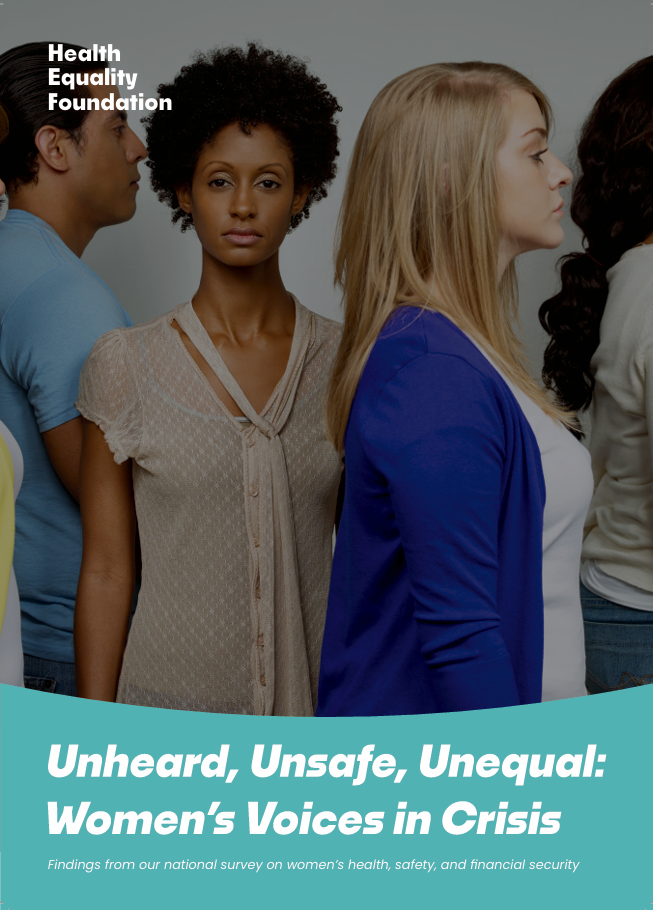
Report: Unheard, Unsafe, Unequal: Women’s Voices in Crisis
We are proud to publish Unheard, Unsafe, Unequal: Women's Voices in Crisis, our most ambitious research to date. Drawing on a nationally representative poll of over 4,000 people across Britain, the report examines what women are experiencing across three interlocking areas: health, financial security and personal safety.
The picture that emerged is one of systems that were not built around women's lives. More than half of women say a healthcare professional has dismissed or downplayed their symptoms. Nearly a quarter have left or reduced work because of childcare costs. Forty-four percent have avoided a place or route because they felt unsafe. These are not isolated experiences. They are the cumulative effect of structural failures across health, the economy and the justice system, and they fall hardest on the women with the least power to absorb them.
What this report makes clear is that these pressures are inseparable. A woman who cannot get a timely diagnosis is also the woman who cannot afford to take time off work. A woman trapped in financial insecurity is also the woman who cannot leave an unsafe relationship. Addressing one without the others will not be enough.
Behind every one of these statistics is a woman, a family, a community. When women's health needs go unmet, when childcare forces them out of employment, when fear narrows their participation in public life, the cost is not borne by women alone. It is borne by all of us. We cannot afford to wait.
Our nine recommendations are specific and achievable. They call for women's health hubs with real diagnostic capacity, mandatory clinical training on women's health, affordable childcare that reaches women in irregular and part-time work, a government target on the gender pension gap, ringfenced funding for specialist VAWG services, and a prevention programme that starts in schools. These are the changes women themselves told us they need. We are calling on government to deliver them.
Report: Women’s Health in the UK - Time for Change
We are excited to launch our latest research: one of the largest nationwide surveys on women's healthcare conducted in recent years, with a sample size of approximately 5,000.
We found women don’t feel listened to by medical professionals or employers. Many are going private, taking out short term loans and buying treatments on credit to afford the care they need. Women are very satisfied with Women’s Health Hubs, but awareness is low. 71% know nothing about them. Most who have visited did not receive a blood test or an ultrasound scan. Both women and men support women’s health and fertility issues being taught on the national curriculum.
Investing in women’s health benefits everyone. Women may on average live longer than men, but they live more of their life in ill-health from specific conditions related to their reproductive organs and hormones.
The moral case is clear: alleviating the often-unnecessary suffering of women with chronic painful conditions or heavy menstrual bleeding, which have not been investigated or taken seriously should be high on the agenda for the new Government. Experiences such as those of Kate should not happen in a modern healthcare system. These are women starting careers with hopes of starting families, mothers with dependents, older women with grandchildren and a well-deserved retirement to enjoy.
There is a really strong economic case for action too: ill-health is causing significant absenteeism, with women having to go part-time or even quit their jobs altogether. Failure to diagnose and treat means that illnesses become more severe and much more expensive to treat, requiring more hospital than outpatient care, and often resulting in mental health problems.

Submission to the NHS: It's time for action
The facts are unequivocal; women’s health issues and the disparities in gynaecological care represent a pressing public health challenge and one that is directly impacting our nation’s economy.
It is essential that funding for the health of women – who make up 51% of our population and 53% of our workforce - is prioritised to enable the government to tackle the critical inequalities in access to care across the UK. But beyond the socio-economic imperative, this is about staying true to the founding principles of the NHS and upholding the fundamental values of a progressive democracy that strives to provide an inclusive, healthier and economically sustainable society.

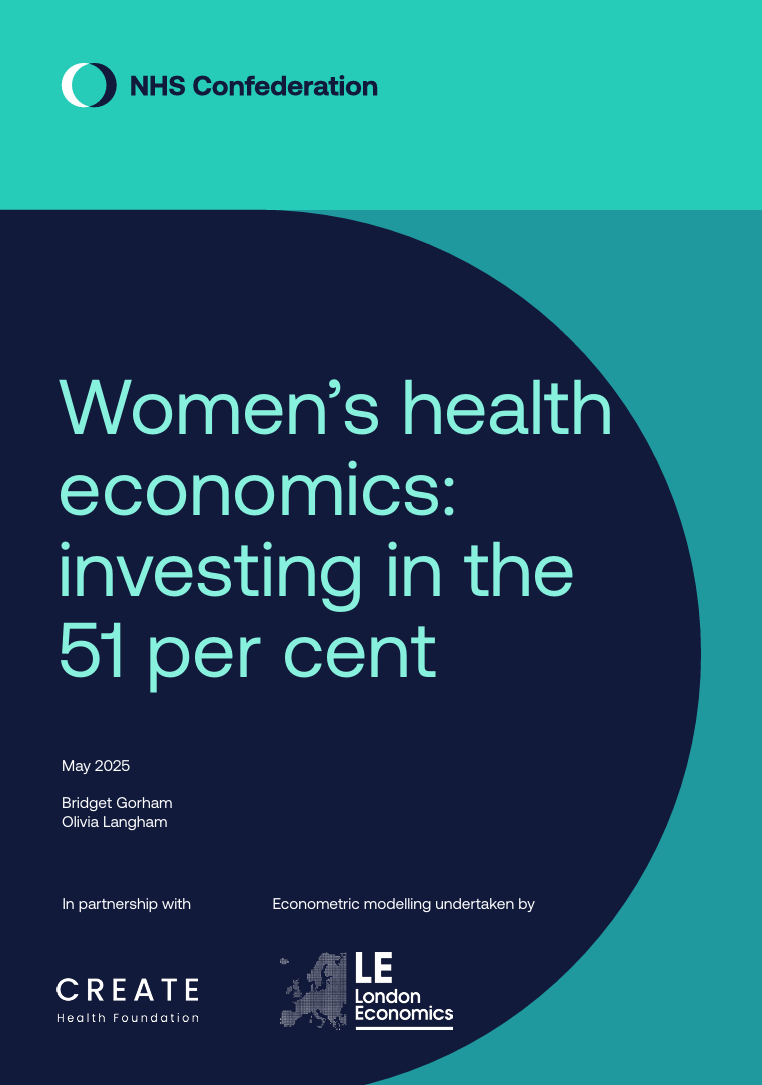
Report: investing in the health of the 51%
Our recent report in partnership with the NHS Confederation reveals the potential economic benefit of closing the gender health gap in the UK.
For too long, women’s health has been neglected. And our economy is paying the price for this: women being unable to work due to certain gynaecological conditions alone has an estimated economic burden of £11 billion annually.
With a estimated return on investment of £11 for every £1 invested in women’s health services, the case is clear. It’s time to prioritise women’s health.

Report: “Where did it start for you?” Understanding the pre-pregnancy experiences of BAME women
Research from MBRRACE in 2022 shows that maternal mortality rates are nearly four times higher in Black women and nearly twice as high in Asian women than White women. CREATE Health Foundation’s report highlights racial disparities across journeys to motherhood in the UK and the steps to tackle them.
“Our report adds to the body of evidence demonstrating unequal experiences of pre-pregnancy and pregnancy care for BAME women. This is a call for urgent action to address these systemic inequalities and biases, and to take forward the evidence-based recommendations to ultimately improve maternal outcomes.”
- Baroness Geeta Nargund and Praful Nargund